Why the Lowest Clear-Span Steel Building Quote Usually Isn't the Lowest Cost
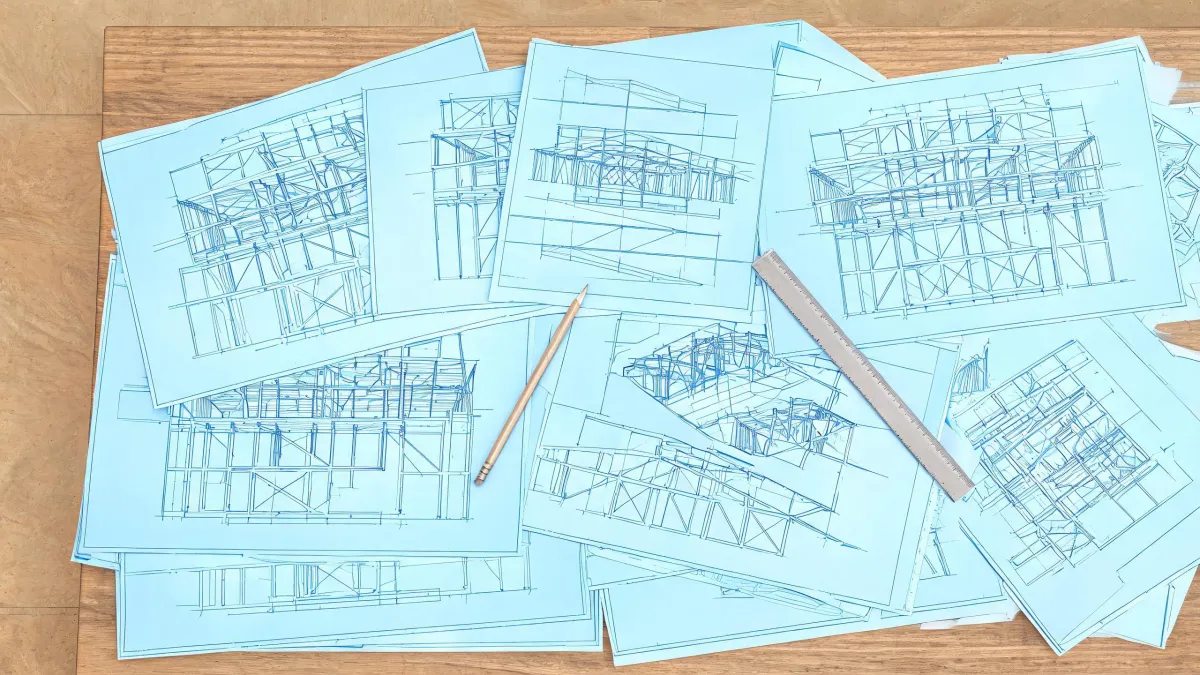
Your lowest clear-span quote is probably not your lowest cost
When I compared three quotes for a 60'x120' clear-span steel building last year, the spread between the cheapest and the most expensive was roughly $41,000. By the time we finished the project—delivered, erected, permitted, insulated—the lowest-quote vendor ended up about $18,000 more expensive than the middle one. The gap wasn't in the steel. It was in everything around the steel.
If you're comparing Clear-Span Steel Building quotes for US projects right now, the number to compare isn't the unit price. It's total landed cost: delivered, erected, inspected, insulated, and code-compliant on your site. Most quotes only show you the first layer.
Where I'm coming from
I'm the office administrator for a 180-person fabrication company in the Midwest. I took over purchasing in 2021. I manage roughly $2.4M annually across about 40 vendors—tooling, industrial supplies, the occasional capital project. In 2024, our shop floor expansion landed on my desk, which is how I learned more about inland buildings and steel structures than I ever planned to.
I'm not a structural engineer, and I'm not a general contractor. I'm the person who reconciles the invoice, explains line items to finance, and answers to operations when something shows up three weeks late or doesn't fit.
What the quote actually covers (and what it doesn't)
Steel building manufacturers quote in pieces. Some quotes are steel package only. Some include freight to a regional terminal. Almost none of them include the following—and every single one showed up in my final accounting:
- Freight from terminal to site. If the quote says "FOB terminal," get a real number for last-mile delivery, including crane fees for unloading.
- Foundation and slab. A clear-span building still needs an engineered foundation. The steel package doesn't include it, and foundation costs vary wildly by soil and frost depth.
- Erection labor. Some manufacturers quote "turnkey" and subcontract erection. Others assume you'll hire your own erector. Those are not the same number.
- Insulation. An "insulated steel building system" means different things depending on the vendor. Get the R-value in writing. I've seen "insulated" packages that were essentially a vapor barrier with a promise.
- Permits and engineering stamps. US project? You need to know which state's code you're building under, and whether the manufacturer's drawings will be accepted by your local authority having jurisdiction (AHJ). This is not a small detail.
- Accessories. Doors, windows, skylights, gutters, downspouts, sealants, anchor bolts, trim. Every manufacturer excludes different items. I once got a quote that didn't include anchor bolts. Anchor bolts.
Before we even got to steel, we compared alternative products—tilt-up concrete, pre-engineered timber, and modular. Steel won on span and cost for our use case, but the comparison itself was useful. It clarified what "clear-span" actually means when you're buying: interior space with no columns, which changes everything downstream (racking layout, forklift paths, HVAC routing). Alternative products each solve a different operational problem. Pick the problem first, then the material.
When I built a spreadsheet comparing my three quotes line-by-line against total landed cost, the rankings flipped. The lowest quote was actually the highest total landed cost once freight, foundation, erection, and accessories were added. That was the surprise—not that the cheapest was expensive, but that the gap in the "extras" was bigger than the gap in the steel.
The code and spec check nobody warns you about
Here's what I underestimated: US code compliance isn't a checkbox. It's a process that starts before you sign a purchase order.
Every building I've purchased since has run through a verification pass before deposit: confirm design loads (snow, wind, seismic) for the actual site; confirm the manufacturer's drawings are stamped by an engineer licensed in the state where the building will stand; confirm your local AHJ will accept the format. If your vendor can't answer those three questions in writing, you're not comparing quotes—you're comparing guesses.
Inland buildings in our region carry snow loads that coastal suppliers consistently underestimate. I've watched a 40 psf assumption turn into a 50 psf requirement after the county reviewer opened the file. That's not a negotiation you want to have after the deposit clears.
I'm not 100% sure why some manufacturers treat code verification as an afterthought. My best guess is volume—the big ones sell so many buildings in standard conditions that non-standard projects become the exception rather than the rule. But for a US project in a state with real wind or snow loads, that's the wrong default.
What I changed about my buying process
After the 2024 buildout, I put a rule in place: no steel building purchase order gets approved without a total landed cost sheet and a written code verification from the manufacturer. It takes an extra week of back-and-forth. It has saved more than one budget conversation with finance.
The mindset shift is simple. I stopped shopping for the lowest quote and started shopping for the most complete one. The five minutes I used to save by accepting the first quote wasn't saving anything—it was deferring cost to a future department budget, usually with a markup. Prevention over cure isn't a slogan in procurement; it's arithmetic.
For our next expansion (probably 2026, pending capital approval), I've started using ArcPath Sourcing to shortlist manufacturers. What I'm actually paying for is the total landed cost comparison and the spec verification—not the steel. The steel is the easy part. The paper trail is where projects get expensive.
When the lowest quote is actually fine
To be fair, this doesn't apply to every project. If you're buying a small utility building in a mild climate with standard loads, and you have an in-house erection crew and a foundation contractor already lined up, the cheapest quote might genuinely be the cheapest total landed cost. My experience is based on about a dozen industrial projects in the Midwest, mostly 40'–80' spans. If you're working with a clear-span aircraft hangar or a large multi-bay warehouse, complexity goes up and the line items multiply. If you're sourcing alternative products like modular or tilt-up, the cost structure is different enough that this whole breakdown changes.
I've only bought one building outside the Midwest. I can't speak to how these lessons translate to hurricane zones or seismic-heavy regions—that's a different conversation entirely.
If there's one thing I'd tell someone starting this process next week: before you compare prices, make every vendor tell you what their number does not include. The honest ones will tell you. The others will explain why you didn't ask sooner.

Jane Smith
I’m Jane Smith, a senior content writer with over 15 years of experience in the packaging and printing industry. I specialize in writing about the latest trends, technologies, and best practices in packaging design, sustainability, and printing techniques. My goal is to help businesses understand complex printing processes and design solutions that enhance both product packaging and brand visibility.
Send a related brief
Use the procurement form if this note matches a live project. It is the same inquiry path as the contact page, kept narrow here.